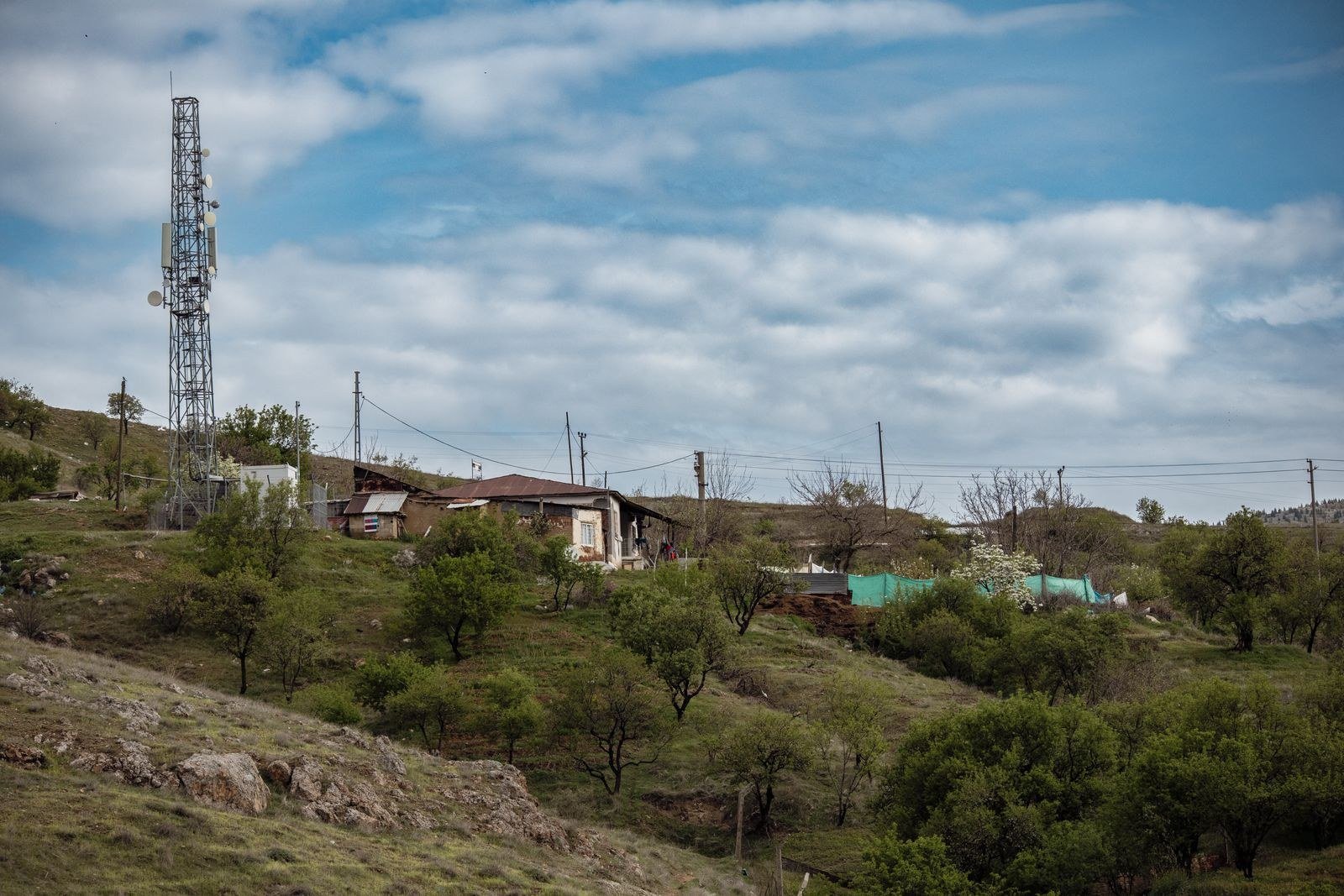
City broadband adverts must feel like they are written about another country. While urban postcodes argue about whether 500Mb or 900Mb is better value, millions of rural homes are still coaxing a copper line into delivering something in the teens — or single figures. If that is your house, this guide works through the real rural broadband options in the order worth trying them: the cheap fixes first, then the wireless workarounds, then the satellite option, and finally the legal rights and public money that exist for exactly your situation. Start by finding out precisely where you stand: check your address with our broadband availability checker, and measure what your current line actually delivers via the SpeedTestUK homepage across a few evenings, not just once at noon.
How rural is the problem, in numbers?
Rural coverage has improved enormously, but the gap is real and it is specific. Ofcom’s Connected Nations research puts gigabit-capable coverage at around 87% of UK premises overall, yet only about 65% of rural premises in England could get a gigabit service at the start of 2026, against roughly 92% in urban areas. Superfast broadband (30Mb or more) reaches about 91% of rural premises — which still leaves hundreds of thousands of homes below it. At the very bottom, Ofcom counts around 44,000 UK premises that cannot get even a “decent” 10Mb connection once mobile coverage is included, and roughly 340,000 premises — about 1% — cannot get 10Mb down a fixed line at all. Those premises are scattered down farm tracks, in hamlets and on moorland edges, which is precisely why the market has been slow to reach them: the cost per connection is brutal, and no advert ever mentions them.
Rung one: squeeze the line you already have
Before spending anything on alternatives, make sure your existing connection is giving you everything it can. On a long rural copper line, small things matter disproportionately. Test from the master socket with everything else unplugged: failed microfilters, extension wiring and elderly routers can quietly halve a slow line, and on a 12Mb connection losing half is the difference between one stream and none. Check your line’s estimated range with your provider — if you are paying for a 36Mb part-fibre package but the line can only ever deliver 15Mb, you are overpaying for a tier your copper cannot reach, and dropping to the cheaper tier loses you nothing. Finally, look beyond the big brands at your exchange: a handful of smaller providers specialise in long-line and rural connections and will sometimes work harder on optimisation and fault-raising than a giant call centre will.
Rung two: 4G and 5G home broadband
For many rural homes this is now the single best answer. A 4G or 5G home broadband hub from EE, Three or Vodafone ignores your copper line entirely and pulls the connection from the mobile network. The catch — and it is the whole game — is signal: rural coverage maps are optimistic, and a mast two fields away behind a hill may deliver less than one five miles off with clear line of sight. So test before you commit. Run our mobile speed test on your phone, on the networks you are considering, at several spots around the house and at peak evening times. An indoor hub on a windowsill facing the mast is the basic setup; the rural upgrade that transforms results is an external antenna mounted high on the house, connected to a router that accepts one. It costs more and needs fitting, but it turns marginal signals into usable ones. Independent measurement backs the potential: Opensignal’s 2026 rural comparison found Starlink ahead on average downloads (about 81Mb), with the best rural mobile result — Three — averaging around 32Mb. That is not fibre, but it is three to ten times what a struggling rural line delivers, and hub contracts include rolling monthly options, so you are not trapped if full fibre finally arrives.
Rung three: fixed wireless and local providers
Between the national mobile networks and satellite sits a layer of providers many rural households never hear about: wireless internet service providers (WISPs) and regional full fibre builders. A WISP beams broadband from a local transmitter — on a church tower, a grain silo, a mast on a hill — to a small dish or panel on your house. Where one covers your valley, speeds of 30–100Mb with local support are common, and the company will usually tell you honestly whether your property can see their transmitter before taking your money. Separately, check whether a regional fibre builder has quietly reached your village: firms such as Gigaclear, Wessex Internet, Voneus, Fibrus and Airband have built deep into rural areas that Openreach has not, often under government contracts. Their networks do not always show up prominently in comparison sites, so search your postcode on thinkbroadband’s maps as well as the mainstream checkers — and re-check every few months, because rural builds land street by street.
Rung four: satellite, the option that works everywhere
Starlink has changed the rural conversation because it does not care where you live. If your garden can see a decent patch of sky, it works. Current UK residential plans are tiered — price trackers through 2026 put the entry plan (capped at 100Mb) at around £40 a month, a 200Mb tier around £60, and the uncapped Max tier around £80 — with the dish sometimes free on promotion and otherwise up to about £299, so check the live price before budgeting. Speeds in rural Britain average around 81Mb down in Opensignal’s testing, uploads are respectable, and latency, while higher than fibre, is low enough for video calls and ordinary gaming — nothing like the old satellite services. There is no long contract; you can pause or cancel. The honest costs: it is the most expensive monthly option on this page, the dish needs an unobstructed view that trees and hillsides can deny you, and heavy weather can briefly dent performance. For a home that cannot get above 5Mb any other way, though, it routinely transforms working from home from impossible to unremarkable.
Your legal safety net: the broadband USO
Since March 2020 you have had a legal right to request a “decent” broadband connection — at least 10Mb download and 1Mb upload — under the Universal Service Obligation. You make the request to BT (or KCOM in the Hull area); you do not need to be their customer. BT must confirm within 30 days whether you are eligible, which broadly means no existing service can give you decent speeds at an affordable price and no publicly funded build is due within 12 months. If connecting you costs £3,400 or less, that cost is covered; above that, you can choose to pay the excess — and neighbours can club together, since one build often serves several properties, splitting the excess between you. Ofcom’s page on how the universal service rules work sets out the detail. Two honest warnings: USO builds can take many months (BT’s delivery targets stretch to two years for the hardest cases), and because 4G and satellite count in the eligibility assessment, genuinely eligible premises are now few. Treat it as a parallel track — request it, but do not sit waiting on it while wireless options could have you online next week.
The public money: Project Gigabit and vouchers
The government’s £5 billion Project Gigabit programme is paying builders to take gigabit networks to the premises the market skipped, aiming for nationwide gigabit coverage of about 99% by 2032. Contracts are awarded region by region — Openreach holds the largest share, with Gigaclear, Wessex Internet, Fibrus (delivering Northern Ireland’s Project Stratum) and others building locally — so the practical question is whether your postcode sits inside a live contract. The GOV.UK page on the Gigabit Broadband Voucher Scheme and the programme is the starting point for checking. The voucher scheme itself, which offered grants of up to £4,500 per premises that neighbours could pool towards a community build, closed to new project submissions on 31 August 2026; existing projects continue, with vouchers being issued until March 2027 and the scheme ending in March 2028. So if a supplier or community group already has a voucher project open for your village, joining it is still very much worth doing — but if nothing exists yet, your area’s future now rests on the Project Gigabit contracts rather than a new voucher application. Community energy still helps: Openreach’s Fibre Community Partnership scheme and a parish-level list of interested households can strengthen the case for your area in future contract rounds, and demonstrating demand costs nothing but a spreadsheet and some door-knocking.
Putting it together: a sensible order of attack
- This week: measure your current line properly with our broadband speed test, test it at the master socket, and confirm you are on the right tier for what the line can do.
- Then: test mobile signals at your house on at least two networks at evening peak. If any network gives you a steady 25Mb+, a hub — ideally with an external antenna — is probably your answer.
- Meanwhile: check for WISPs and regional fibre builders covering your postcode, and register interest with all of them.
- If wireless fails you: price Starlink properly, including the dish, and weigh it against the cost of a line that does not support your work.
- In parallel, always: file the USO request if you think you qualify, and check whether a Project Gigabit contract or an existing voucher project covers your village.
Frequently asked questions
What is a decent speed for a rural home?
The legal definition of “decent” under the USO is 10Mb down and 1Mb up — enough for one HD stream and ordinary browsing, tight for a busy household. In practice, a stable 25–30Mb transforms daily life (two streams, video calls, updates that finish), and anything above 50Mb covers most families comfortably. Stability matters as much as the headline: a steady 25Mb beats a line that swings between 60Mb and 2Mb.
Is 4G home broadband really better than a rural phone line?
Often, yes — if the signal is there. A long copper line may cap at 5–15Mb whatever you pay, while a 4G hub with a good signal and an external antenna regularly delivers 30–80Mb. The reverse is true where mobile coverage is patchy or the mast is congested at peak times. That is why the answer is always to test at your own house, at the times you actually use the internet, before cancelling anything.
Can I still get a broadband voucher for my village?
Only through a project that already exists. The Gigabit Broadband Voucher Scheme closed to new project submissions on 31 August 2026, though suppliers can still issue vouchers on live projects until March 2027 ahead of the scheme’s end in March 2028. If a supplier or community scheme is already collecting pledges for your area, join it; otherwise your route to gigabit is a Project Gigabit contract build, which you can check via GOV.UK.
Does the USO mean BT must connect me for free?
No — it means you can request a connection of at least 10Mb, and the build cost is covered up to £3,400 (excluding VAT). If your connection costs more than that, you pay the excess, although costs can be shared with neighbours who would benefit from the same build. Many very remote connections cost far more than the threshold, which is why some households conclude satellite is cheaper overall.
Will full fibre ever reach my house?
Probably, but “eventually” is doing heavy lifting. Project Gigabit targets about 99% gigabit coverage by 2032, and Ofcom’s Connected Nations update for spring 2026 shows rural gigabit coverage climbing year by year. The last 1% of premises — the most remote — may be served by wireless or satellite instead. Plan on a five-to-ten-year horizon for the hardest addresses, and choose today’s connection on that basis.
The bottom line for rural households
You are not limited to whatever the copper line feels like delivering. Test the line you have, test the airwaves around your house, check the small providers and the government schemes, and keep satellite in reserve as the guaranteed fallback. Rural broadband options reward the methodical: an afternoon of measuring with our mobile speed test and a postcode check will tell you more than a month of reading adverts, and for most rural homes the answer turns out to be better — and sooner — than the “not available” messages suggest.